
Airport advertising is usually measured by visibility, premium audiences, and passenger traffic. But one of its most powerful effects often happens after the traveler has left the airport. The return journey advantage explains how airport advertising creates brand memory before a purchase decision is ever made.
Why airport advertising influences future purchases
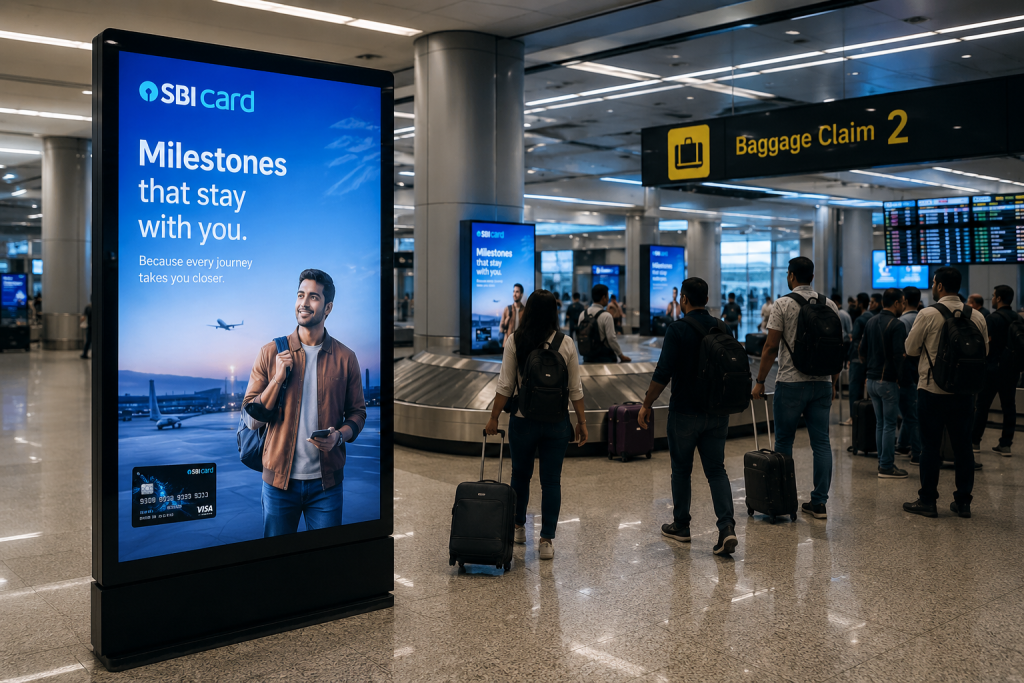
Most consumers do not buy immediately after seeing an airport campaign. Instead, they encounter the same brand across multiple travel moments—departure terminals, security zones, lounges, boarding gates, arrival corridors, and baggage claim. These repeated exposures create familiarity, and familiarity becomes the foundation of future brand preference.
The purchase may happen days, weeks, or even months later, but the memory has already been established during the journey.

The psychology of travel and memory
Travel places people in a heightened state of awareness. They notice signage, navigation systems, retail displays, digital screens, and environmental branding more carefully than in many everyday settings. Because airports involve planning, waiting, and movement through structured spaces, brand messages are processed in a context that supports stronger memory formation.
A campaign seen during departure and then encountered again on the return trip gains a unique advantage: reinforcement through repetition across separate travel events.
The power of the return journey
The return journey is often overlooked in media planning. Yet it may be the moment when a brand feels most familiar. A traveler who saw a campaign before leaving and again after returning experiences a complete memory cycle. The second exposure confirms recognition and strengthens recall.
This is especially valuable for categories such as financial services, automobiles, technology, luxury products, education, healthcare, and travel platforms, where purchasing decisions are rarely impulsive.