
Airport advertising is often discussed in terms of reach and passenger numbers. However, one of its most important advantages lies in where the brand is positioned.
An airport is not one advertising environment. It is a collection of interconnected spaces, each with its own passenger behaviour, movement patterns and attention opportunities.
Passengers enter through specific doors, move toward check-in counters, pass through security, explore retail areas and eventually reach their boarding gates. These movements create a physical geography of attention.
For brands, understanding this geography can make airport branding considerably more strategic.
 Airport Branding
Why Location Changes Brand Exposure
The same advertisement can create a completely different experience depending on where it appears.
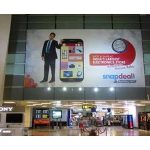
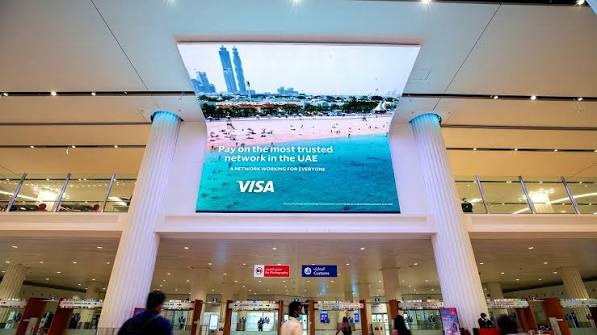
A large-format installation near a terminal entrance may create an immediate first impression. A digital screen near a waiting area can support repeated exposure. A branded walkway can accompany passengers as they move between zones, while a gate-area installation can reach passengers during a period of waiting.
Therefore, airport OOH planning should not simply ask how many passengers pass a particular location.
It should also consider what passengers are doing when they encounter the brand.
Mapping the Passenger Movement
Every terminal has natural movement patterns.
Passengers are usually guided by signage, flight information, security procedures and architectural layouts. These patterns can be studied to identify locations where travellers naturally slow down, change direction, queue or wait.
This creates opportunities for brands to become part of the passenger journey.
Rather than placing advertising randomly throughout the terminal, brands can build a sequence of carefully selected touchpoints.
The campaign can then follow the traveller rather than forcing the traveller to find the campaign.
From Media Sites to Attention Zones
One of the biggest changes in modern airport advertising is the shift from thinking about media sites to thinking about attention zones.
A media site is simply a place where advertising can be displayed.
An attention zone is a location where passenger behaviour creates a specific opportunity for communication.
For example, a busy walkway may deliver strong visibility, while a seating area may provide longer viewing time. A security queue may create repeated exposure, while a retail corridor may connect advertising with commercial intent.
Each location has a different strategic role.
Building a Connected Brand Presence
Strategic airport branding can use these different environments to create a connected campaign.
A brand might begin with a large visual statement at the terminal entrance. Further along the passenger route, smaller digital screens can reinforce the message. A branded architectural element can create another memorable interaction, followed by a final communication near the boarding gate.
The individual executions can be different while maintaining a consistent identity.
This creates the feeling that the brand is present throughout the terminal rather than occupying one isolated advertising position.