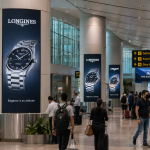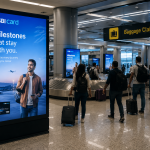
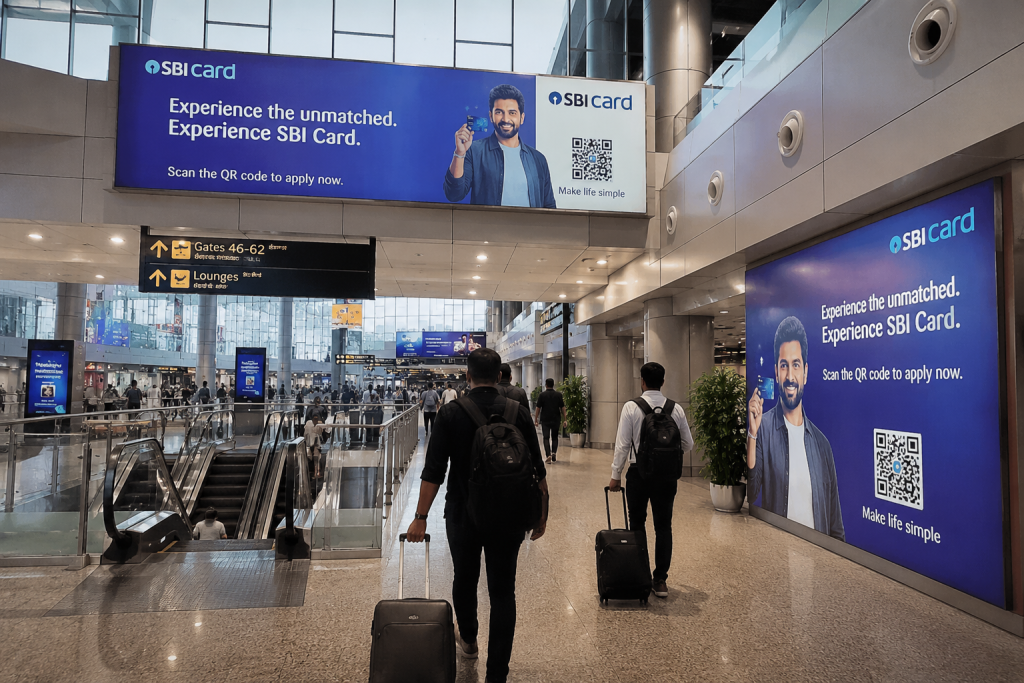

A traveler entering an airport is not the same consumer throughout the journey. At check-in, the focus is on logistics and timing. At security, attention becomes concentrated and directional. In retail areas, the passenger shifts into a browsing and purchasing mindset. At the boarding gate, waiting creates extended attention windows, while baggage claim encourages observation and environmental awareness.
This means a single airport campaign can interact with the same individual across multiple psychological moments, each reinforcing the previous impression.
Why repetition inside airports works differently
Unlike traditional outdoor media, airport advertising benefits from structured repetition. A passenger may see the same brand on terminal displays, digital screens, walkway panels, lounge environments, and gate-area media. These exposures are connected by the journey itself.
The result is cumulative memory formation rather than isolated awareness. Each touchpoint strengthens familiarity, and familiarity increases the likelihood of future brand consideration.

The strategic value of journey-based advertising
The most effective airport campaigns are designed as journey systems, not individual placements. Brands that coordinate messaging across key airport zones create a consistent narrative that travels with the passenger.
For premium brands, travel services, financial products, technology companies, and automotive categories, this creates an environment where repeated visibility signals scale, credibility, and relevance.
The gate sequence effect changes how airport advertising should be measured. Success is not only about how many passengers see a campaign; it is about how many times the same passenger experiences it across the journey.
When advertising aligns with changing passenger mindsets, airports become more than transit spaces. They become sequential brand-building environments where repetition, context, and movement work together to create lasting recall.