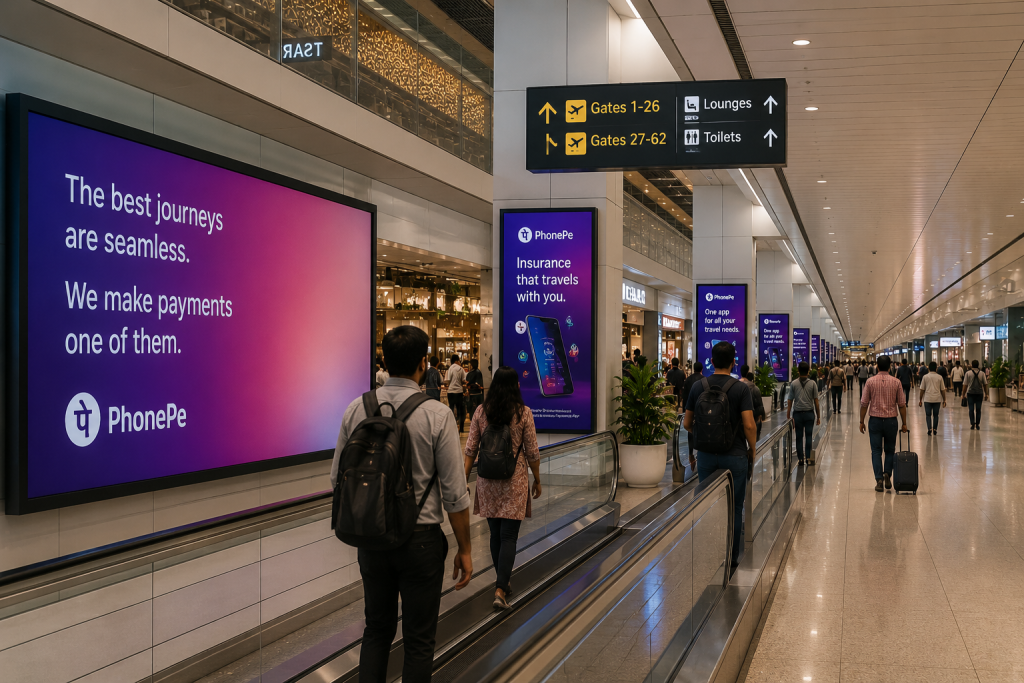

The most effective airport advertising is not always the campaign that captures the loudest attention. Increasingly, the strongest airport OOH campaigns are those that blend naturally into the passenger journey. This innovative airport advertising campaign demonstrates how subtle, integrated branding can influence travelers without interrupting their experience.
The power of invisible airport advertising
Modern airports are designed to guide passengers smoothly through check-in, security, boarding, and retail zones. Advertising that becomes part of this environment often performs better than campaigns that compete aggressively for attention.
When branding is integrated into walkways, digital navigation screens, waiting areas, boarding corridors, or retail surroundings, passengers absorb the message naturally. They do not feel interrupted, yet the brand becomes part of their airport experience.
Why subtle visibility creates stronger impact
Travelers are already processing a large amount of information inside airports. Loud advertising can sometimes become background noise. Integrated airport advertising works differently. It reduces resistance and increases familiarity through repeated exposure across multiple passenger touchpoints.
This approach creates a sense of presence rather than interruption. The brand feels relevant to the environment, making it easier for passengers to remember later.
The role of the passenger journey
Airport advertising is most effective when it follows passenger movement. From terminal entrances and security zones to lounges and boarding gates, each location offers a different level of attention.
Campaigns that align with these movement patterns create a continuous brand experience. Instead of relying on a single large-format display, they build memory through consistent and context-aware visibility.
This strategy is particularly valuable for premium brands, airlines, financial services, luxury retail, technology companies, and travel-focused businesses.
The future of airport OOH
The future of airport advertising is becoming less intrusive and more intelligent. Brands are increasingly using architecture, digital integration, and passenger behavior insights to create campaigns that feel effortless.
This campaign highlights an important shift in outdoor advertising: visibility does not always require disruption. Sometimes the most successful airport campaign is the one passengers barely notice, because it becomes a seamless part of the space they are already moving through.
In today’s competitive airport environment, subtle integration, contextual relevance, and repeated exposure are becoming the true drivers of brand influence.