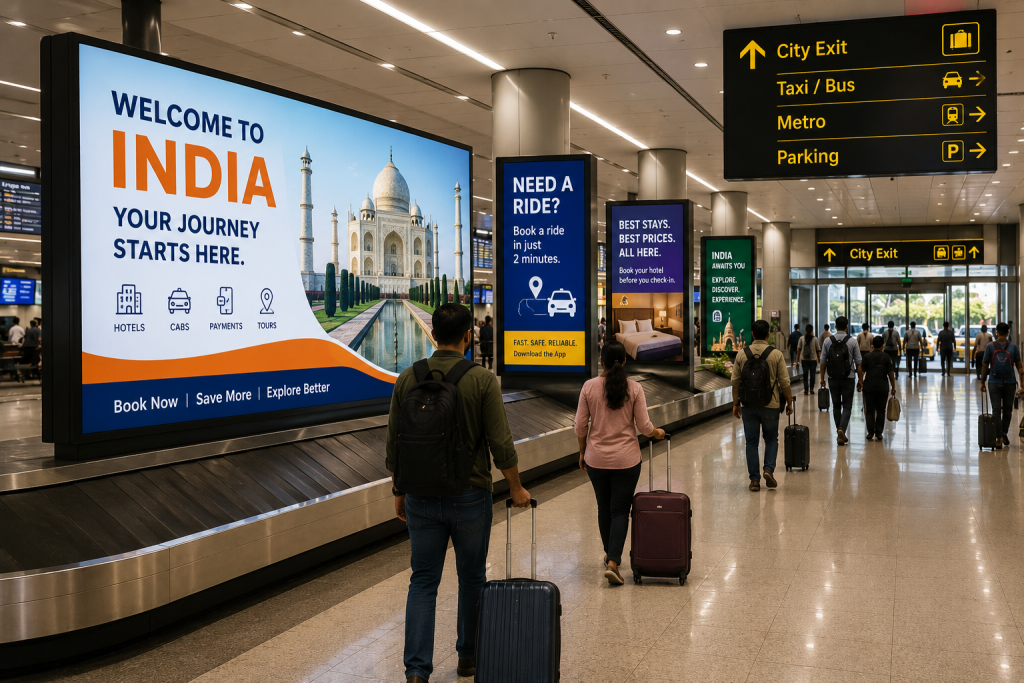

Most airport advertising strategies focus on departures, boarding gates, and waiting lounges. However, one of the most overlooked opportunities begins after passengers land. The journey between baggage claim and the city exit is a high-intent advertising zone where travelers make immediate decisions about transportation, accommodation, dining, shopping, and local services. This innovative airport OOH campaign highlights the powerful marketing potential of the post-arrival journey.
Why arrivals deserve more attention
After landing, passengers are actively planning their next move. They are booking cabs, checking hotel details, searching for restaurants, arranging payments, and navigating a new city. This creates a unique moment where advertising can influence real actions rather than just brand awareness.
Unlike departure zones, arrival areas connect directly with local consumption. Brands have the opportunity to become part of a traveler’s first city experience.
The baggage claim advantage
Baggage claim areas naturally create dwell time. Passengers remain in a relatively fixed location while waiting for luggage, making them more receptive to well-placed digital screens, branded baggage belts, wall displays, and directional media.
The environment is less crowded with competing messages than many departure zones, allowing campaigns to achieve stronger visibility and message retention.

From awareness to immediate action
The path from baggage claim to the airport exit includes taxi queues, ride-hailing pickup zones, metro connections, airport parking, and arrival concourses. These locations offer advertisers access to consumers who are ready to spend.
Hotels can drive bookings, mobility platforms can encourage app usage, payment brands can promote local transactions, and retail businesses can influence destination-based purchases. The advertising opportunity is highly measurable because it connects directly with post-arrival behavior.
A smarter airport OOH strategy
The future of airport advertising lies in understanding the complete passenger journey. Arrival media should not be treated as secondary inventory. It should be viewed as a conversion-focused environment where brands can influence transportation choices, local exploration, and immediate commercial decisions.
This campaign demonstrates that the most valuable airport impression may occur after the aircraft lands. By focusing on the journey between baggage claim and city exit, brands can create stronger local relevance, higher engagement, and more actionable consumer outcomes.