
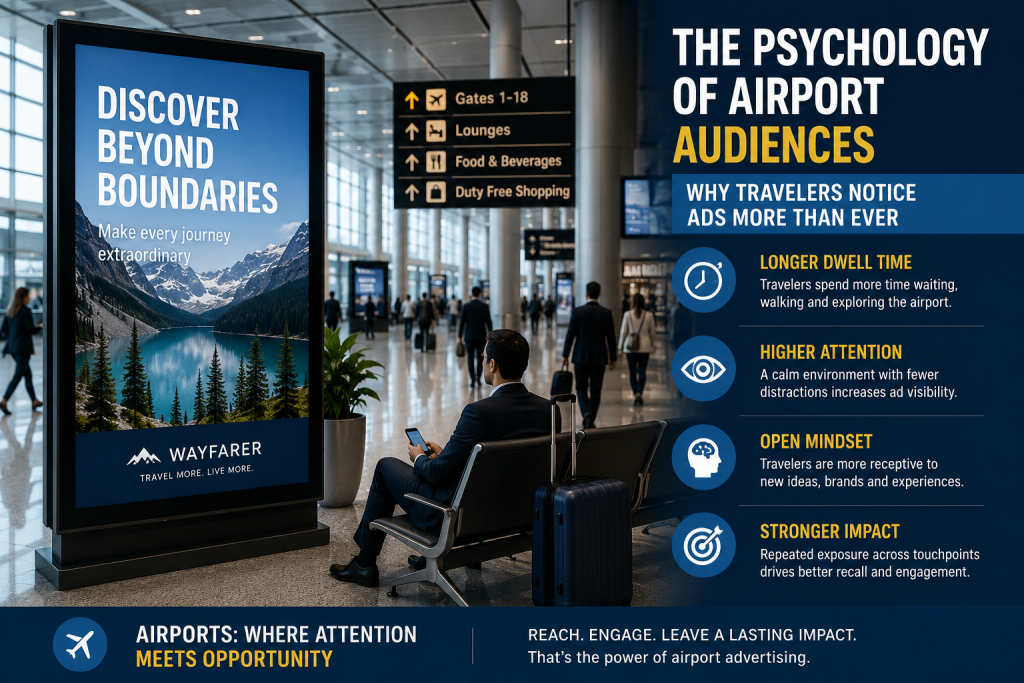

In today’s fast-paced digital world, capturing consumer attention has become one of the biggest challenges for advertisers. People are constantly exposed to advertisements across smartphones, social media, websites, and streaming platforms. As a result, attention has become a valuable and limited resource. However, airports offer a unique environment where brands can connect with audiences more effectively.
Unlike consumers rushing through their daily routines, travelers often experience periods of waiting throughout their airport journey. From check-in and security screening to boarding gates and lounges, passengers spend considerable time within the airport environment. This extended dwell time creates natural opportunities for brands to capture attention and deliver impactful messages.
Why Airport Audiences Are More Receptive
The psychology of travel plays an important role in advertising effectiveness. Travelers are often in a mindset of exploration, anticipation, and decision-making. They are more likely to observe their surroundings, discover new products, and engage with information that catches their interest.
Airports also offer a relatively distraction-free advertising environment compared to crowded urban settings. Large-format displays, digital screens, and premium media placements stand out clearly within airport terminals, increasing visibility and audience engagement.This combination of attention, curiosity, and extended exposure helps improve brand recall and message retention.
The Power of High Dwell Time
One of the greatest advantages of airport advertising is the amount of time travelers spend in terminals. Unlike roadside advertising, where exposure lasts only a few seconds, airport media can engage audiences for extended periods.
Repeated exposure across multiple touchpoints—from entrance areas and security zones to lounges and boarding gates—reinforces brand messages and creates stronger consumer connections. This continuous presence helps advertisers maximize awareness and influence purchasing decisions.