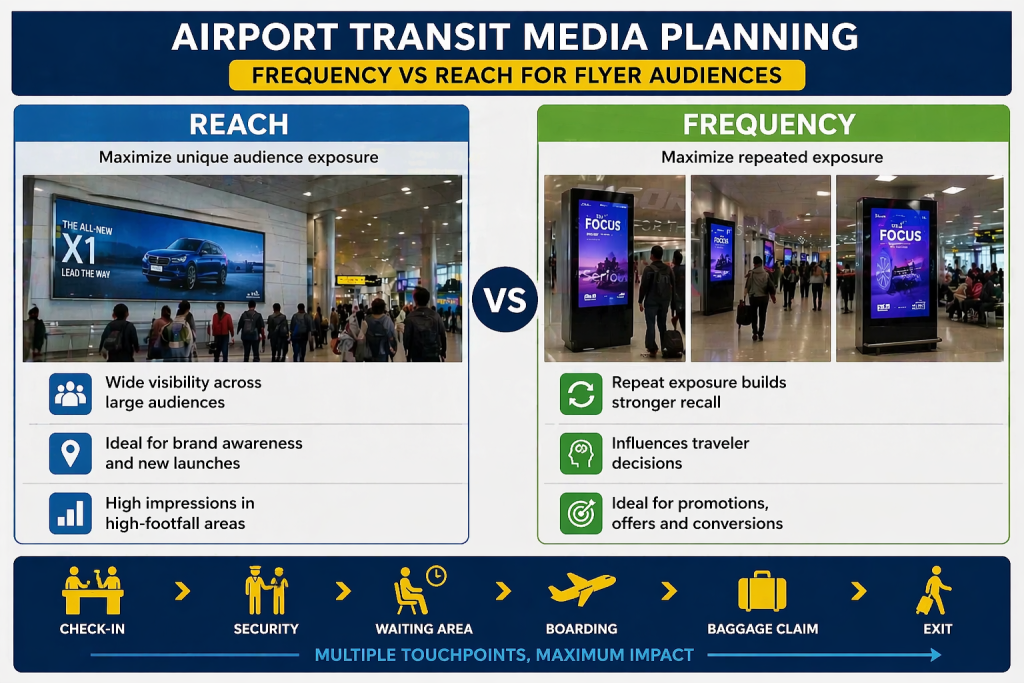

In airport transit media planning, reach refers to the number of unique travelers exposed to your brand message. Airports attract diverse, high-value audiences—from business executives to leisure travelers—making them ideal for broad visibility campaigns. High-reach formats such as large-format hoardings at entry gates, terminal facades, and check-in zones ensure your brand connects with a wide spectrum of passengers.
For brands launching new products or aiming for mass awareness, prioritizing reach helps establish a strong presence early in the customer journey. The goal is simple: be seen by as many relevant travelers as possible, especially in high-footfall areas where impressions are naturally amplified.
The Role of Frequency in Influencing Recall
While reach gets your brand noticed, frequency ensures it is remembered. Frequency refers to how often a traveler encounters your message throughout their airport journey. Strategic placements across security checks, waiting lounges, aerobridges, and baggage claim areas help reinforce the same message multiple times.
This repetition builds familiarity and trust, increasing the likelihood of recall and action. For instance, a traveler who sees a brand at check-in, again at security, and later at boarding is far more likely to remember it compared to a single exposure. Frequency-driven campaigns are especially effective for service-based brands, app promotions, or time-sensitive offers.
Balancing Frequency and Reach for Maximum Impact
The most effective airport advertising strategies strike a balance between reach and frequency. Overemphasizing reach without repetition may lead to low recall, while excessive frequency in limited zones may restrict audience coverage.
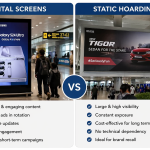
A well-planned campaign uses high-reach formats to capture attention initially, followed by repeated exposures in high-dwell areas to strengthen recall. Digital screens can enhance frequency through rotating creatives, while static hoardings maintain continuous visibility across key touchpoints.
Conclusion: Smart Planning Drives Better ROI
Airport transit media planning is not about choosing between frequency and reach—it’s about integrating both intelligently. By aligning ad placements with passenger movement and behavior, brands can create a seamless, high-impact presence that drives awareness, recall, and conversion among flyer audiences.