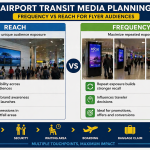

Understanding the Airport Advertising Landscape
Airports are premium advertising ecosystems where brands compete for the attention of affluent, time-rich travelers. Choosing between digital screens and static hoardings is a key strategic decision. Each format offers unique strengths, and the effectiveness often depends on campaign objectives, audience behavior, and placement within the airport journey.
The Power of Digital Screens
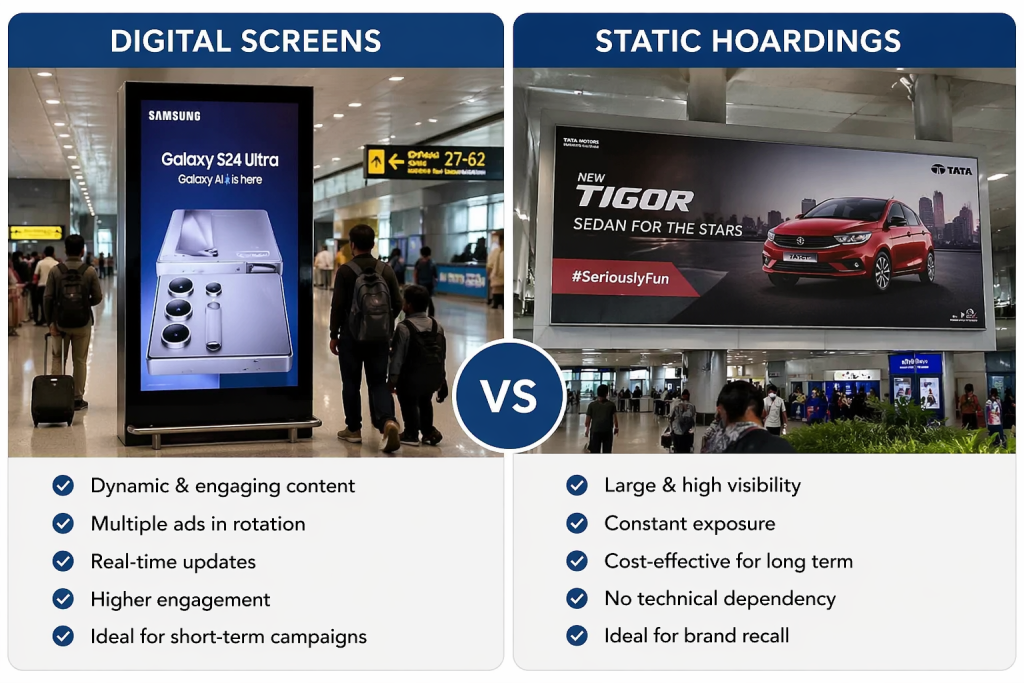
Digital screens bring flexibility, motion, and real-time adaptability to airport advertising. These displays can rotate multiple creatives, enabling brands to tailor messages based on time, audience demographics, or even live data. Video content, animations, and dynamic visuals naturally attract more attention, especially in high-footfall zones like security checks and boarding gates.
Additionally, digital formats allow quick updates, making them ideal for time-sensitive campaigns, offers, or event-based promotions. The ability to measure impressions and engagement also gives advertisers better insights into performance, helping refine campaigns for improved ROI.
The Strength of Static Hoardings
Static hoardings, on the other hand, offer unmatched visibility and constant presence. Large-format billboards placed at entry gates, drop-off zones, or baggage claim areas ensure repeated exposure to every passenger passing through. Their simplicity often works in their favor—clear, bold messaging without distractions can leave a lasting impression.
Static formats are also cost-effective for long-term campaigns. Since they don’t rely on technology, they eliminate risks like screen downtime or technical glitches, ensuring uninterrupted brand visibility.
Which Works Better? A Strategic Approach
Rather than choosing one over the other, the most effective airport campaigns integrate both formats. Digital screens are excellent for engagement and storytelling, while static hoardings reinforce brand recall through continuous exposure. For example, a traveler might first notice a dynamic digital ad at security and later recall the brand through a large hoarding at baggage claim.
Conclusion: Integration is the Key
In the airport environment, success lies in strategic placement and format synergy. Combining digital innovation with the reliability of static hoardings creates a powerful, multi-touchpoint advertising experience that captures attention, builds recall, and drives action.